
Jim Corbett National Park
About
Spanning over 520 square kilometers, the National park is a unique confluence of the sub-Himalayan belt and the Terai regions. Its landscape is defined by the Ramganga River, which creates vast grasslands (Chaur) and dense Sal forests. It is an ecological hotspot in Uttarakhand that serves as a vital corridor for the Asian Elephant migration and supports over 600 species of birds, making it a premier destination for ornithologists.
History
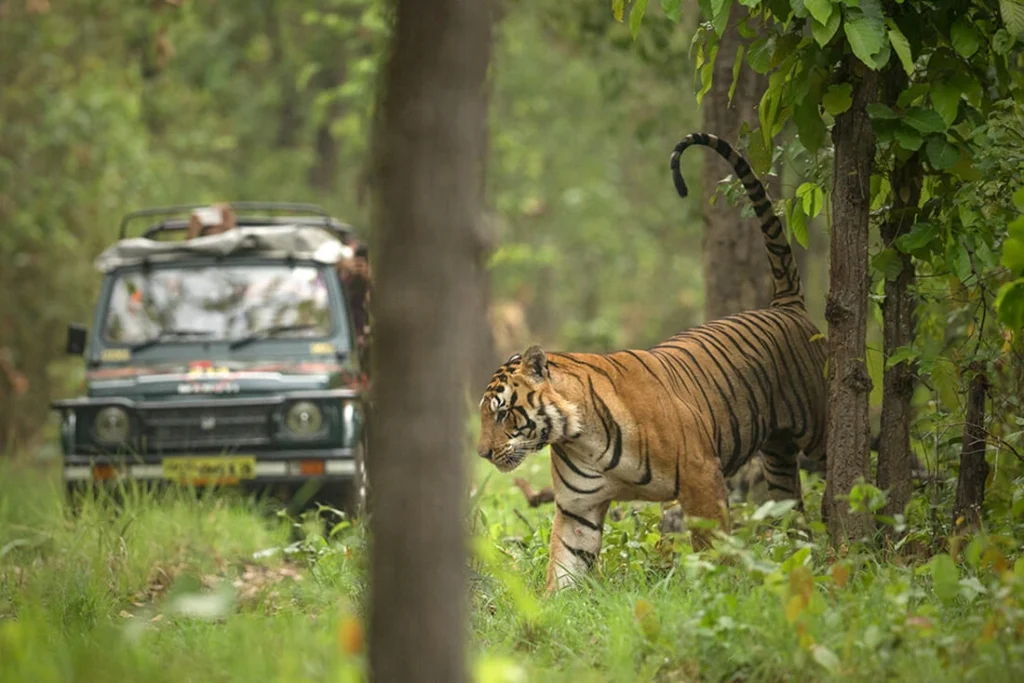
Originally protected as a game reserve, it was renamed in 1957 after Jim Corbett, a hunter-turned-conservationist who played a pivotal role in its establishment. Its legacy is tied to the 1973 launch of Project Tiger India, which shifted the nation’s wildlife paradigm from “preservation” to “active conservation,” making it the global blueprint for tiger protection.
Wildlife in Jim corbett
- Royal Bengal Tigers
- Leopards, Wild Elephants, Himalayan Black Bears
- Deer species: Chital, Sambar, Barking Deer
- Gharials and Crocodiles in the Ramganga River
- 600+ Bird Species including Kingfishers, Eagles, Vultures, Parakeets
Zones
Dhikala: The “Tiger Capital” of the park. Best for long vistas and epic elephant crossings.
Bijrani: Scenic, rugged, and high-density. Your best bet for that perfect tiger shot.
Jhirna: Your “All-Weather” zone. Great for birding and wildlife sightings even in the rains.
Dhela: Quiet, lush, and rich in biodiversity. A hidden gem for serious nature observers.
Durga Devi: The Birdwatcher’s Paradise. Hilly trails meets riverside tranquility.
Sitabani & Garjiya: The Buffer Beauty. Perfect for a mix of spiritual temple visits and offbeat forest drives.
Best Time to Visit
- November to June → Best time for safari & tiger sightings
- July to October → Monsoon, some zones (like Jhirna & Dhela) remain open but others close
Safari Timings
- Morning Safari: 6:00 AM – 9:30 AM (timings vary with season)
- Evening Safari: 3:00 PM – 6:00 PM
Skip the booking stress and dive straight
Secure your spot in the wild instantly with Safari Sutra