
Eravikulam National Park
About
Located in the high-altitude hills of Munnar, Eravikulam is a rolling grassland and shrubland ecosystem. It is the best place for High-Altitude Wildlife Photography in South India, offering views of the Anamudi peak.
History
It was managed as a game preserve by the Kanan Devan Hills Produce Company before being handed to the government. It is world-famous for the Neelakurinji flowers that carpet the hills in blue once every 12 years.
Wildlife of Eravikulam
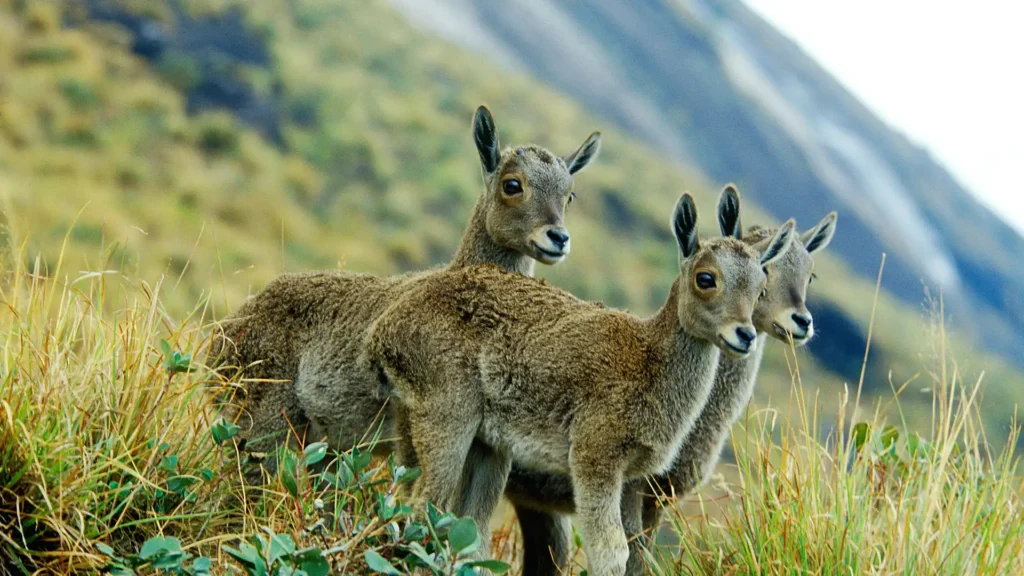
- Nilgiri Tahr: The star of the park. This endangered mountain goat is endemic to the Western Ghats; you can see them grazing on the cliffs very close to the walking trails.
- Nilgiri Marten: India’s only marten species and incredibly rare. It is a sleek, dark-brown carnivore with a distinctive bright yellow throat.
- Lion-Tailed Macaque: One of the most endangered primates in the world, recognizable by its silver-white mane and “lion-like” tail.
- Atlas Moth: One of the largest moths in the world, with a wingspan that can reach up to 25cm. It is a prized sighting for insect enthusiasts.
- Nilgiri Langur: A beautiful primate with a glossy black body and a golden-brown head, often heard “whooping” through the shola canopies.
- Himalayan Black Bear (Wait, mistake alert!): Actually, it’s the Himalayan Black Bear’s cousin, the Sloth Bear, and occasionally Leopards. Tigers are also present but are extremely elusive in this high-altitude terrain.
Safari Zones in Eravikulam
- Rajamalai Zone (The Tourism Zone): This is the only area visitors can explore. The forest department official bus takes you up a winding 4-5 km road with breathtaking views. Once dropped off, you explore a 1.5 km paved stretch on foot. This “walking safari” the best way to see the Nilgiri Tahr up close.
- The Core & Buffer Zones: These are strictly closed to tourists and reserved for research and conservation of the fragile ecosystem.
Best Time to Visit
- September to January: This is the best time. The weather is cool, the skies are clear, and the waterfalls are in full flow.
- The “Neelakurinji” Factor: Once every 12 years, the hills turn purple with the blooming of the Neelakurinji flowers. The last major bloom was in 2018; the next is expected in 2030.
The park usually closes for 45–60 days in February and March. This is the calving season for the Nilgiri Tahr (when they give birth), and the park is shut to give the mothers and babies peace.
Safari Timings
- Morning Safari: 6:30 AM – 11:00 AM
- Afternoon Safari: 2:30 PM – 6:30 PM
Skip the booking stress and dive straight
Secure your spot in the wild instantly with Safari Sutra