
Keoladeo Ghana National Park
About
Formerly known as the Bharatpur Bird Sanctuary, this is a world-renowned UNESCO World Heritage Site. It is an anthropogenic (man-made) wetland that serves as a critical wintering ground for thousands of migratory birds. Unlike many other parks, Keoladeo offers a tranquil experience where visitors can explore via bicycle or rickshaw safaris, making it a favorite for wildlife photography and eco-tourists.
History
Originally developed in the late 19th century as a private duck-shooting reserve for the Maharajas of Bharatpur. The park’s ecosystem was created by diverting waters from the Ajan Bund. It famously hosted the world’s most elite hunting parties, including British Viceroys, before hunting was banned and it was declared a national park in 1982.
The Wooded "Ghana" Thickets
Best area to spot land mammals like Nilgai, Sambar Deer, and forest birds like the Spotted Owlet.
wildlife in Keoladeo Ghana National Park
- Sarus Crane (World’s tallest flying bird)
- Indian Rock Python (Often seen at “Python Point”)
- Royal Bengal Tiger (Occasional transient visitors from nearby Ranthambore)
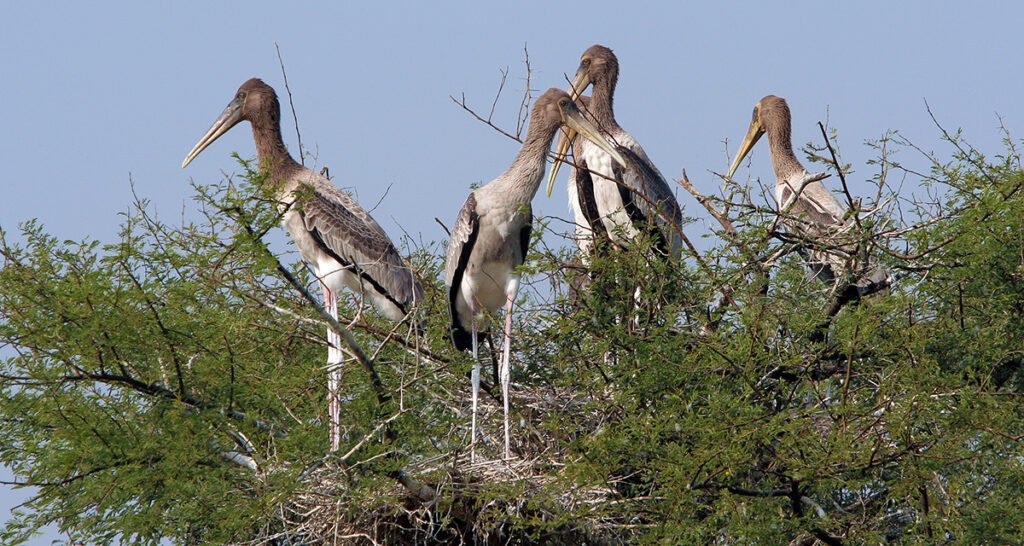
- Painted Stork
- Siberian Crane (Rare/Historical winter visitor)
- Nilgai (Blue Bull)
- Bengal Monitor Lizard
- Chital (Spotted Deer)
- Bar-headed Goose (Migrates over the Himalayas)
- Indian Gray Mongoose
- Sambar deer
Zones
Sundarbans, “safari zones” are primarily defined by a network of watchtowers and water channels, as the entire experience is boat-based.
- Sajnekhali Zone: The administrative gateway featuring a bird sanctuary, a mangrove interpretation center, and a crocodile pond.
- Sudhanyakhali Zone: Widely considered the best spot for tiger sightings, as it overlooks a freshwater pond that attracts predators and prey alike.
- Dobanki Zone: Famous for its 500-meter-long Canopy Walk, a fenced bridge 20 feet above the ground that lets you see the forest from a bird’s-eye view.
- Netidhopani Zone: A historic and restricted area home to 400-year-old temple ruins and a deep-forest legend, limited to only a few boats per day.
The Python Point & Scrubland
Indian Rock Pythons that can be seen basking near their burrows, especially during the winter months.
The Wetland & Central Basin
Primary hub for Sarus Cranes and migratory waterfowl.It is the most popular stretch for cycle-rickshaw safaris, featuring the spectacular heronry where thousands of storks nest.
Best Time to Visit
- November to February: This is the prime time for migratory bird watching.
- August to October: Visit during or just after the monsoons to see resident birds like Painted Storks and Herons in their colorful nesting phase.
Safari Timings
- Morning Safari: 6:30 AM – 11:00 AM
- Afternoon Safari: 2:30 PM – 6:30 PM
Skip the booking stress and dive straight
Secure your spot in the wild instantly with Safari Sutra