
Rajaji National Park
About
Located at the edge of the Shivalik hills where the Himalayas begin, this park is a stunning blend of dense broadleaf forests, riverbeds, and grassy meadows. It serves as a vital transition zone between the temperate Himalayas and the fertile Indo-Gangetic plains, offering breathtaking views of the Ganges River flowing along its boundary.
History
The park was created in 1983 by merging three sanctuaries: Rajaji, Motichur, and Chilla. It is named after C. Rajagopalachari (fondly known as “Rajaji”), the first Governor-General of independent India, who famously refused to hunt a tiger here after being moved by the area’s natural beauty.
Wildlife in Rajaji National park
- Famous for its massive population of Asian Elephants, Bengal Tigers, and elusive Leopards.
- Unique Mammals: Spot the Goral (Himalayan Mountain Goat), Himalayan Black Bear, Sloth Bear, Striped Hyena, and the Yellow-throated Marten.
- Reptiles & Birds: Home to the King Cobra, Indian Rock Python, and over 315 bird species including the Great Hornbill and Crested Serpent Eagle.
Zones
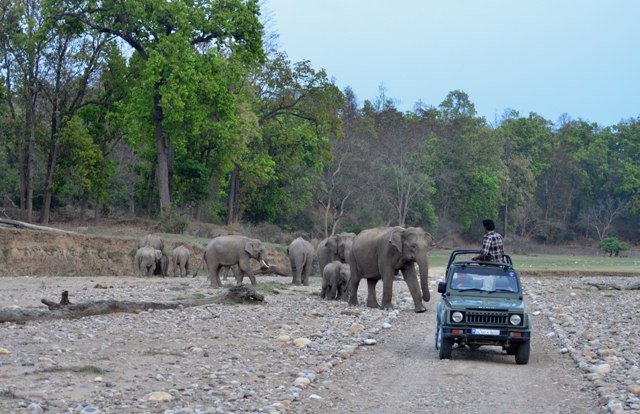
- Chilla Range (The Most Popular) This is the “front desk” of Rajaji. It offers a 36km safari track and is the best place to see Wild Elephants and the Ganga River views.
- Motichur Range Located near Rishikesh, A prime corridor for tigers moving between Rajaji and Corbett.
- Jhilmil Jheel (Conservation Reserve) A marshy grassland located on the banks of the Ganges. It is the only place in Uttarakhand where you can see the endangered Swamp Deer (Barasingha).
- Ranipur Range Known for its rugged, dry deciduous forest. It has a high density of Leopards and Spotted Deer.
- Mohand Range zone is famous for its tall Sal trees and is a major transit point for elephants.
- Kunao Range very lush and is becoming a hotspot for leopard sightings.
Best Time to Visit
- December to March: This is the most pleasant time. The weather is cool, and the forest is lush, best time for Birdwatching as migratory birds arrive in the Ganges belt.
- April to June: As the weather gets hotter, elephants and tigers move toward the Ganga River and other water bodies. If you want to see large herds of wild elephants, this is your best window.
Safari Timings
- Morning Safari: 6:30 AM – 11:00 AM
- Afternoon Safari: 2:30 PM – 6:30 PM
Skip the booking stress and dive straight
Secure your spot in the wild instantly with Safari Sutra