
Ranthambore National Park
About
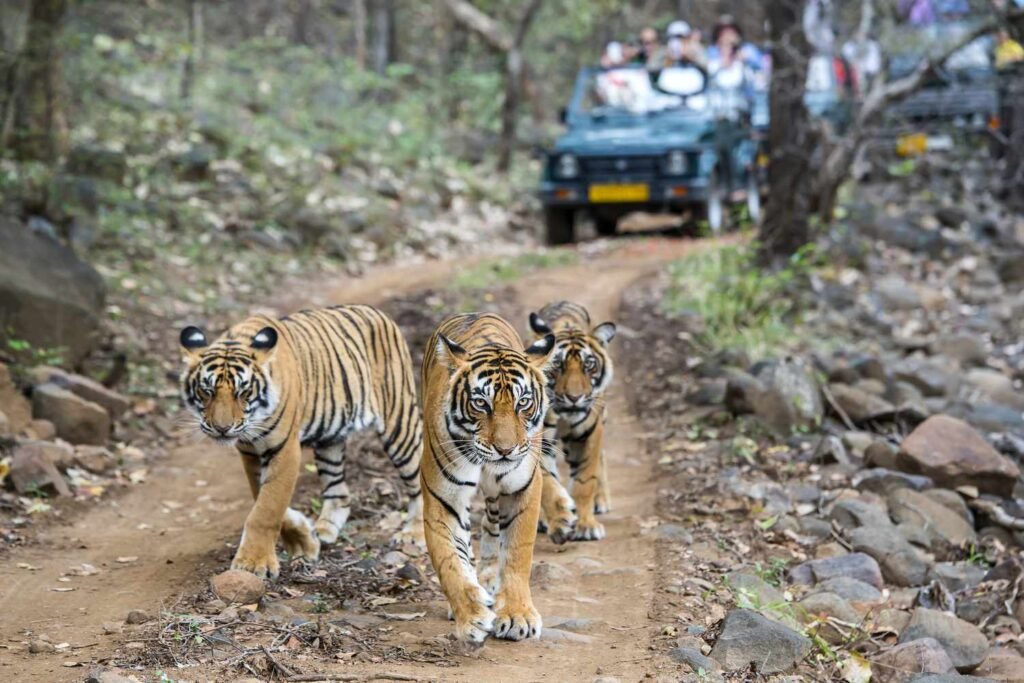
Situated at the junction of the Aravalli and Vindhya hill ranges, Ranthambore offers a rugged, dry deciduous terrain. The park is famous for its three large lakes—Padam Talao, Raj Bagh, and Malik Talao—which act as a focal point for wildlife tourism in Rajasthan. It is one of the few places in the world where a top predator has adapted to hunt in full view of humans, often amidst ancient ruins.
History
The park’s history is inseparable from the UNESCO World Heritage Ranthambore Fort, which dates back to 944 AD. Once the private hunting grounds of the Maharajas of Jaipur, the area was declared a sanctuary in 1955 and became a National Park in 1980. It gained international fame through the legendary tigress Machli.
Wildlife in Ranthambore
Ranthambore is home to a rich variety of wildlife:
- Royal Bengal Tigers – main attraction
- Leopards, Sloth Bears, Jackals, Hyenas
- Marsh Crocodiles and Turtles
- Sambar Deer, Chital (Spotted Deer), Blue Bull (Nilgai), Wild Boar
- Over 300 species of birds – Kingfishers, Eagles, Owls, Vultures
Zones
- zone 1 (Singh Dwar): A dense forest area known for the territory of tigress Noor and frequent sightings at Tuti Ka Nala.
- Zone 2 (Bakaula): One of the best zones for tiger sightings, featuring multiple water holes and high wildlife density.
- Zone 3 (Padam Talao): The most scenic zone, home to the iconic Ranthambore Fort backdrop and the famous lake-prowling tigers.
- Zone 4 (Malik Talao): A wild, predator-rich area that was once the home of the legendary tigress Machli.
- Zone 5 (Kachida): A beautiful landscape bordering the fort, known for its rocky paths and sightings of sloth bears and leopards.
- Zone 6 (Kundal): An open grassland buffer zone that acts as a major corridor for tigers moving between core areas.
- Zone 7 (Chidikho): A hilly and rugged terrain that offers a peaceful, private safari experience with a focus on leopards.
- Zone 8 (Balas): A scenic Aravalli hill zone that is a favorite for spotting leopards and rare bird species.
- Zone 9 (Kuwalji): An untouched wilderness on the banks of the Chakal River, famous for its calm vibes and caracal sightings.
- Zone 10 (Aantri): A newer, hilly zone that has become highly popular for its recent surge in tiger and bird activity.
Best Time to Visit
- October to June (open)
- March to May (Best season for tiger sightings)
- July to September (Park remains closed due to monsoon)
Safari Timings
- Winters
Morning safari – 6:00 am – 10:00 am
Afternoon safari 1:30 pm – 5:00 pm - Summers
Morning safari – 5:30 am – 9:30 am
Afternoon safari – 2:30 pm – 6:00 pm
Skip the booking stress and dive straight
Secure your spot in the wild instantly with Safari Sutra