
Sariska National Park
About
Nestled in the rocky Aravalli Hills, Sariska is a rugged landscape of scrub-thorn forests and historic ruins. It is a key destination for Wildlife Tourism in Rajasthan, offering a starkly beautiful backdrop for tiger tracking near Alwar
History
Once the exclusive hunting reserve of the Maharajas of Mysore, it was established as a sanctuary in 1931. It became one of the first nine reserves to be protected under Project Tiger in 1973, playing a pivotal role in elephant and tiger conservation.
Wildlife in sariska national park
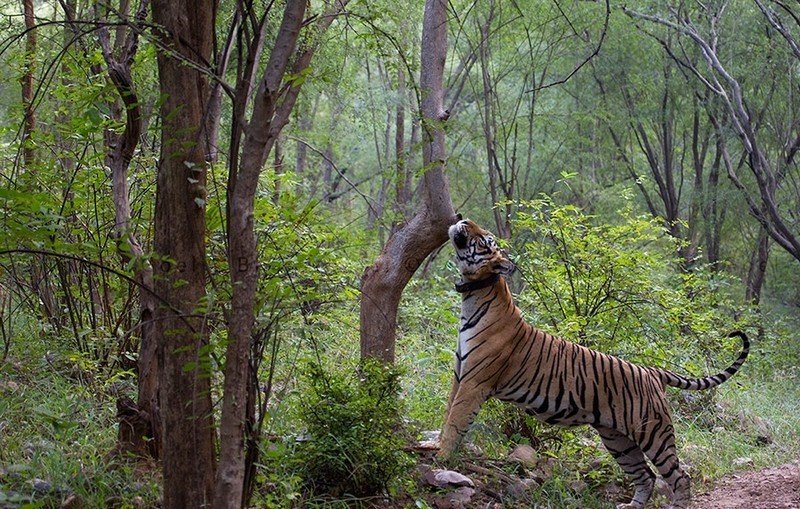
- Royal Bengal Tiger: The pride of the park. After reintroduction, the population has grown significantly, and they are frequently seen in the core zones.
- Indian Leopard: Sariska has a very high leopard density. They are often spotted on the rocky outcrops and hilly terrains of the Aravalli range.
- Striped Hyena: Sariska is one of the best places in India to spot this elusive nocturnal scavenger, often seen near the park’s edges at dusk.
- Sambar Deer: The largest deer in India; Sariska’s population is exceptionally high, and they are a primary prey for the tigers.
- Four-Horned Antelope (Chousingha): A rare and shy animal, it is the only species in the world with four horns, found in the hilly parts of the park.
Sariska Gate (Main Gate)
- Zone 1: The most popular zone with high tiger density. It includes the path to the famous Pandupol Hanuman Temple.
- Zone 2: Features denser forest and rocky topography; excellent for spotting leopards and sloth bears.
- Zone 3: Known for its wide valleys and water bodies, making it great for herbivores and birdwatching.
- Tehla Gate:
- Zone 4: Located about 80km from the Sariska gate. It is quieter and less crowded, offering a more raw wilderness experience.
Best Time to Visit
- October to March: The most comfortable time. The weather is cool (10°C to 25°C), the forest is green, and migratory birds arrive.
- April to June: The “hot” season. As temperatures soar above 40°C, tigers spend most of their time near water holes, making them much easier to track and photograph.
Safari Timings
- Morning Safari: 6:30 AM – 11:00 AM
- Afternoon Safari: 2:30 PM – 6:30 PM
Skip the booking stress and dive straight
Secure your spot in the wild instantly with Safari Sutra