
Sundarbans National Park
About
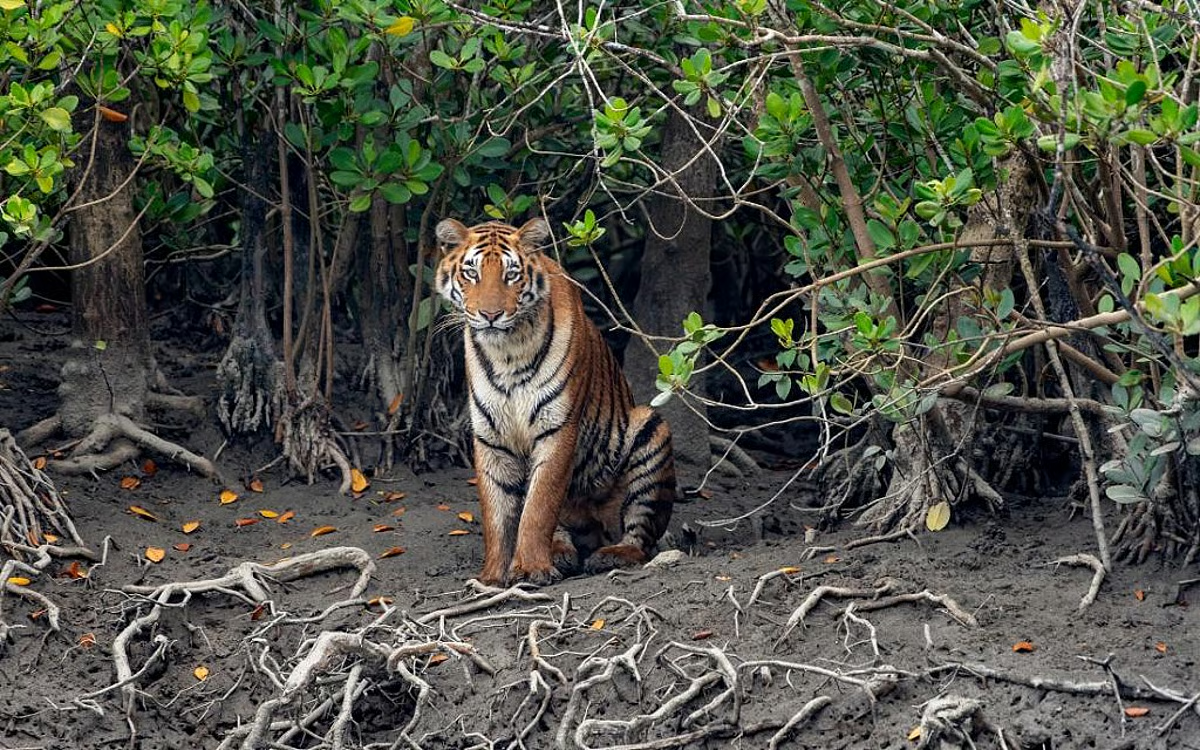
A UNESCO World Heritage Site, the Sundarbans is the largest mangrove forest in the world. The terrain is an intricate web of tidal waterways and mudflats where tigers have adapted to a semi-aquatic lifestyle, drinking saline water and becoming expert swimmers.
History
The name is derived from the ‘Sundari’ tree species. It was the first mangrove forest to be brought under scientific forest management in India in the 1860s. In 1973, it was declared a Tiger Reserve because of its unique predator-prey dynamics.
Wildlife in Sundarbans national park
- Royal Bengal Tiger: The only tigers in the world that live in mangroves; they are legendary swimmers and remarkably elusive.
- Saltwater Crocodile: The world’s largest reptile, often seen basking on mudflats or gliding silently through brackish creeks.
- Chital (Spotted Deer): The primary prey for tigers, usually found near the forest edges where they feed on mangrove leaves.
- Wild Boar: Rugged foragers that play a vital role in the ecosystem by tilling the mud for roots and seeds.
- Rhesus Macaque: Highly social primates often seen in large troops along the riverbanks or swinging through the canopy.
Zones
Sundarbans, “safari zones” are primarily defined by a network of watchtowers and water channels, as the entire experience is boat-based.
- Sajnekhali Zone: The administrative gateway featuring a bird sanctuary, a mangrove interpretation center, and a crocodile pond.
- Sudhanyakhali Zone: Widely considered the best spot for tiger sightings, as it overlooks a freshwater pond that attracts predators and prey alike.
- Dobanki Zone: Famous for its 500-meter-long Canopy Walk, a fenced bridge 20 feet above the ground that lets you see the forest from a bird’s-eye view.
- Netidhopani Zone: A historic and restricted area home to 400-year-old temple ruins and a deep-forest legend, limited to only a few boats per day.
Best Time to Visit
- November to March Pleasant, best for tiger sightings & birdwatching
- April to June Hot & humid, but active wildlife
- July – September Heavy rains, not ideal for safari
Safari Timings
- Morning Safari: 7:00 AM – 10:00 AM
- Midday Safari: 10:30 AM – 1:30 PM
- Afternoon Safari: 2:00 PM – 5:00 PM
(Boat permits required; timings may vary with tide & season)
Skip the booking stress and dive straight
Secure your spot in the wild instantly with Safari Sutra